
Last year we were able to hire Jared Spool to train our team on User Centered Design. This was a very fortunate experience for all. It helped the greater team understand User Centered Design and how it's driven from user needs vs. user wants. I especially was thrilled because I knew of his celebrity. I remember trying to relay to my co-workers how famous he was in the realm of UCD.
Here's a quick run down of the process he took us through.
Establish priorities quickly with group decision making.
KJ-Method
- Step 1: Determine a Focus Question
- Step 2: Organize the Group
- Step 3: Put Opinions (or Data) onto Sticky Notes
- Step 4: Put Sticky Notes on the Wall
- Step 5: Group Similar Items
- Step 6: Naming Each Group
- Step 7: Voting for the Most Important Groups
- Step 8: Ranking the Most Important Groups
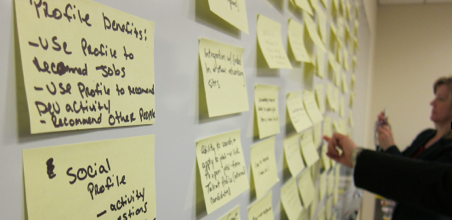
Observe users in their environment
Observe real people in real-life situations to find out what makes them tick: what confuses them, what they like, what they hate. Where they have latent needs not addressed by current products and services.
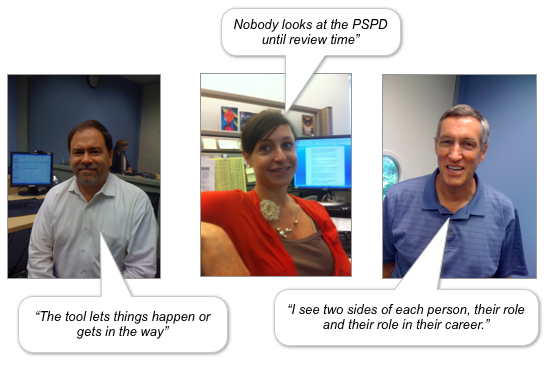
Analyze interview notes for patterns and surprises
Identify differences between two people. Switch person and continue to identify differences till exhausted. Then, prioritize differences for topic from brainstorm (1,2,3 voting technique). Create range of values for each difference. Go through interviews and tag people that are important for the differences
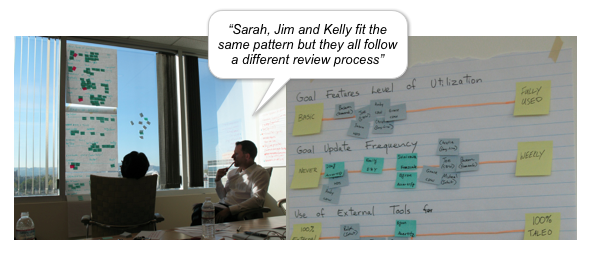
Identify top personas and draft key scenarios
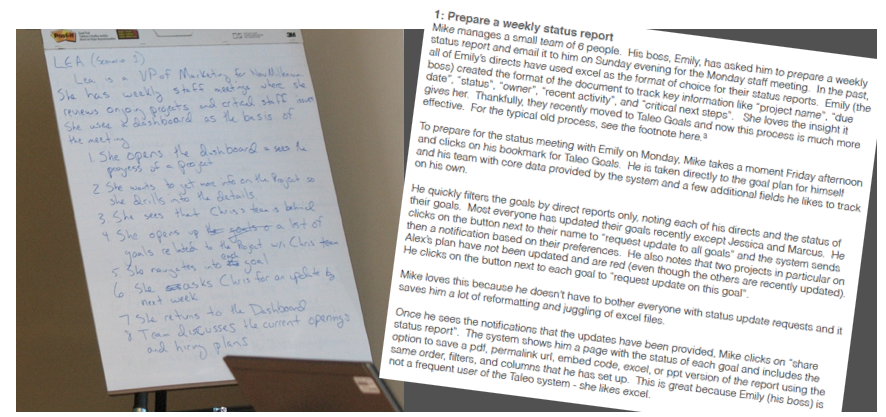
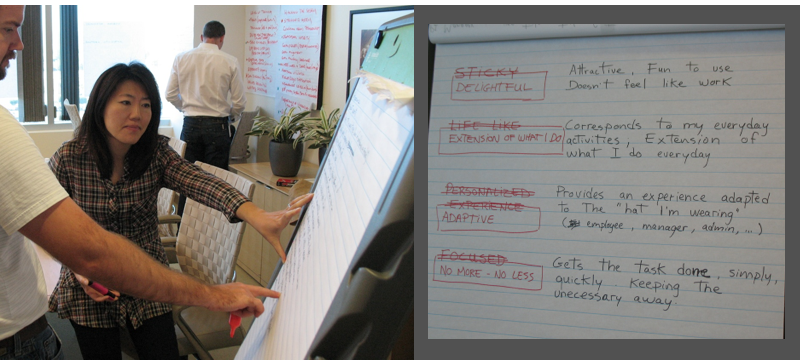
Identify design principles
Without discussion write all the negative points we have heard from customers that affect the KJ brainstorm item. Discuss these points and write design principles that we would need to follow in order to address all points. Narrow list of design principles to 4 items (1,2,3 voting technique).
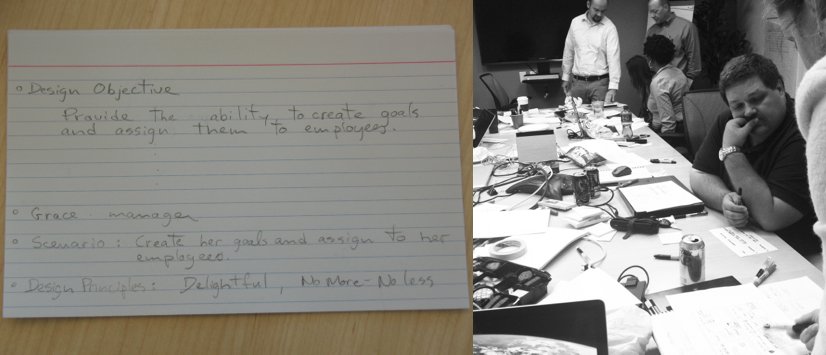
Develop a Creative Brief
State the idea you want to work on, for which persona, which scenario and what design principals you will focus on.
Sketch Fast
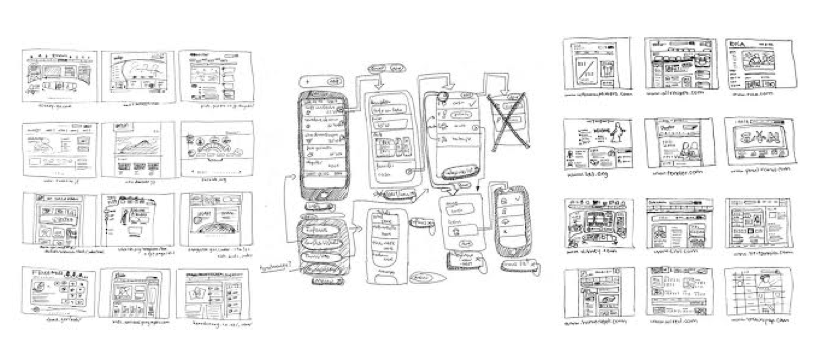
Six box sketching
- Create 6 different ideas for how to address the scenario
- Review with people, identify likes
- Create 6 more ideas for how to address, identify likes
Map sketches to steps, identify gaps, more 6-box for gaps
Pick a step to create 1-ups
- Draw a more fleshed out version of one of the 6-box ideas for each step
- Review, identify likes
- Create a more refined version
- Review identify likes
- Create a more refined version of someone else's 1-up
- Review, identify likes
- If no convergence, discuss which items from each sketch are liked, sketch idea that combines the best of each
- Establish clear, measurable goals
- Speak clearly
- Focus on the problem, not the solution
- Talk about your rationale
- Criticism is negotiable
Share & Critique
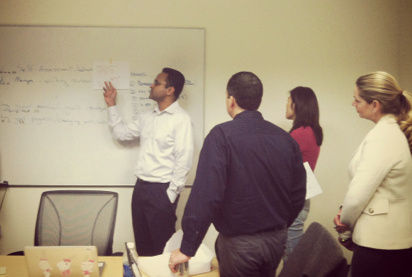
With the whole team involved have a Critique session, present your final design idea focusing on two aspects:
1. What are we trying to do?
2. Did we accomplish it?
Important:
Bad criticism impedes good design
Good criticism guides good design
Validate
Get input from our internal team, from the client, from knowledgeable people not directly involved with the project, and from people who make up the target market. Watch for what works and doesn’t then further refine the idea.